Swap manual mapping for real-time automation
In specialized research environments, technical documentation has a habit of scattering. It hides in fragmented, open-source files that lack version control, leaving stakeholders in the dark and significantly slowing down important research–research that could save lives.
A director of biomedical informatics reached their breaking point with the heavy loadx of manual mapping that had to be done across their team of 15. Using old-school methods to build SQL ER diagrams and complex workflow charts was a massive time-suck, creating a stubborn bottleneck in the research lifecycle.
The team needed to solve three core operational issues:
-
Scattered institutional memory: Moving away from isolated, risky files into a single, university-governed platform.
-
The tech-to-ops gap: Connecting backend research logic directly with day-to-day project management.
-
Blind executive reporting: Finding a clear, headache-free way to pitch complex informatics strategies to non-technical campus leaders.
The Lucid solution: Trading static charts for automated ecosystems
To break the bottleneck, the informatics team leveraged the Lucid Work Acceleration Platform. They evolved from basic diagramming to building an integrated, automated workflow engine that links research data straight to daily operations.
Here is how they overhauled their documentation ecosystem:
1. Blazing speed with Mermaid and AI
To match the speed of a highly technical team, the department embraced "diagram-as-code" using Lucid’s Mermaid functionality. Instead of manually dragging and formatting shapes for hours, informatics specialists can now generate complex SQL ER diagrams and flowcharts in minutes using raw code. This automation frees up the team to focus on data architecture and research integrity rather than fighting with a canvas.
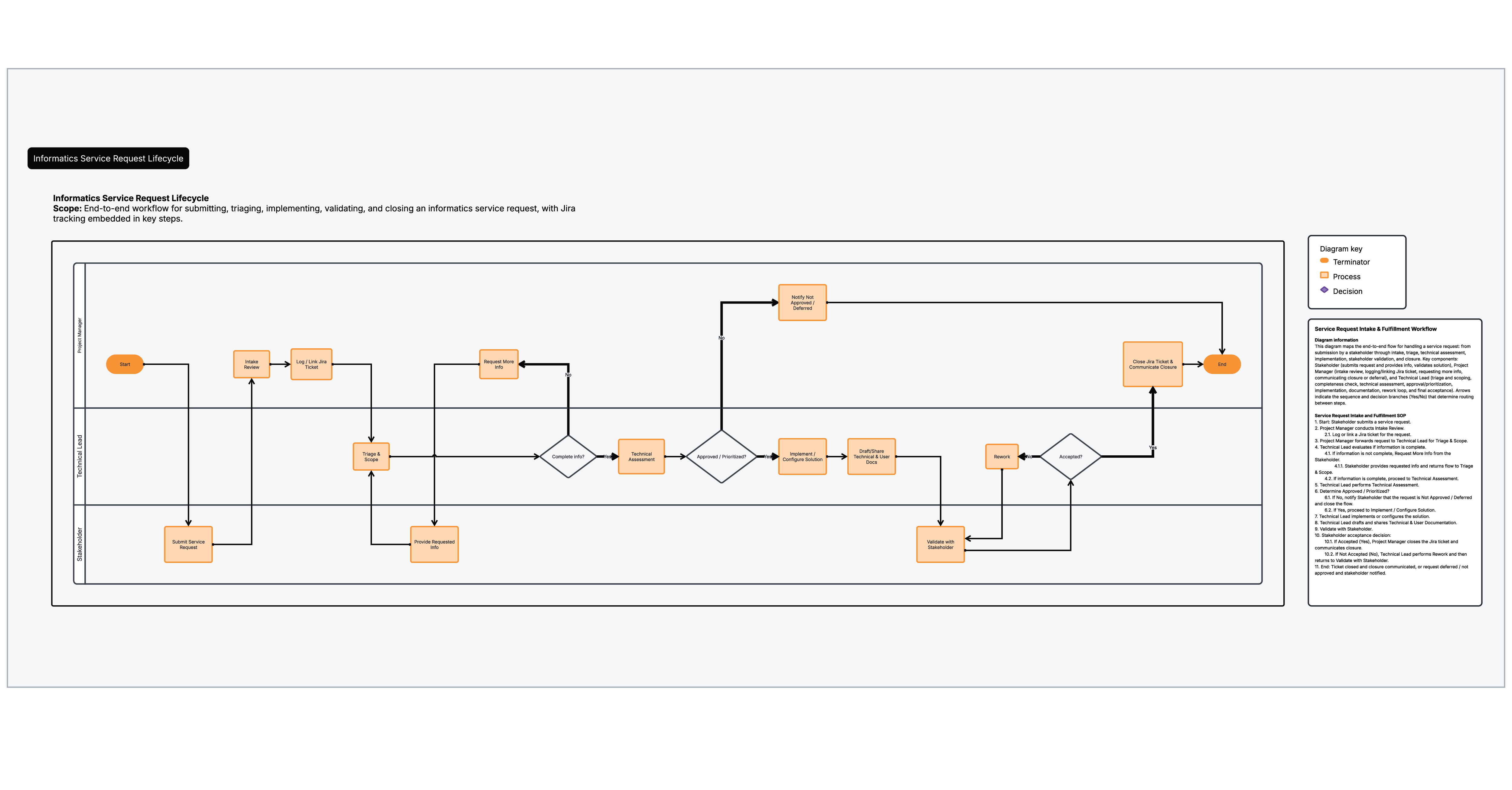
2. A blueprint for the service request lifecycle
The team built a standardized visual blueprint to govern how research informatics requests are taken in and executed. This live dashboard features:
-
Horizontal swimlanes: Instant clarity on who owns what across project managers, tech leads, and stakeholders.
-
Live Jira integration: Embedded, real-time Jira cards synced directly inside the swimlanes, tracking the exact live status of service tickets on the process map.
-
Visual status indicators: A crisp color hierarchy (like green for completed intake and yellow for active triage) providing instant operational situational awareness.
3. Frictionless executive reporting
Forget building static, outdated slide decks for every board meeting. Use presentation mode and secure publishing features to share dynamic, interactive views of informatics landscapes, like this team now does. University leadership gets a clean look at the big picture, and because it lives in Lucid, they are always looking at the most current version.
The Payoff: A living, scalable source of truth
By automating technical assets and syncing them with real-time project management data, the informatics team transformed how they handle research requests. They didn’t just fix their documentation—they built a living ecosystem that effortlessly scales alongside the university’s data demands.
“Something like this would probably take a couple of hours at least... now we’re able to create these in minutes with Mermaid.” — Director of Biomedical Informatics

