Higher Ed
Enhance teaching and foster collaboration with tools that simplify lesson planning, improve student interaction, and integrate seamlessly into your existing systems.

Centralizing visual collaboration to secure institutional memory and drive scale
Managing fragmented digital tools across large-scale educational systems introduces severe governance risks and escalates operational costs. By deprecating disparate visual applications in favor of a single visual collaboration platform, a prominent public education department established a central source of truth, simplified procurement, and grounded its future AI transformation in unified context.
Topics:

Scaling Standard Work in Multi-Campus Systems: Transitioning from Informal Rules to Governed Operational Repositories
Large public university systems and multi-campus environments frequently face operational vulnerabilities caused by siloed administrative departments and inconsistent communication from central offices. By replacing informal, word-of-mouth procedures with standardized visual workflows, operations leaders can capture and preserve critical institutional memory. This strategic guide provides a repeatable framework to reduce process friction, eliminate communication gaps, and build transparent, scalable administrative structures across cross-functional units.
Topics:
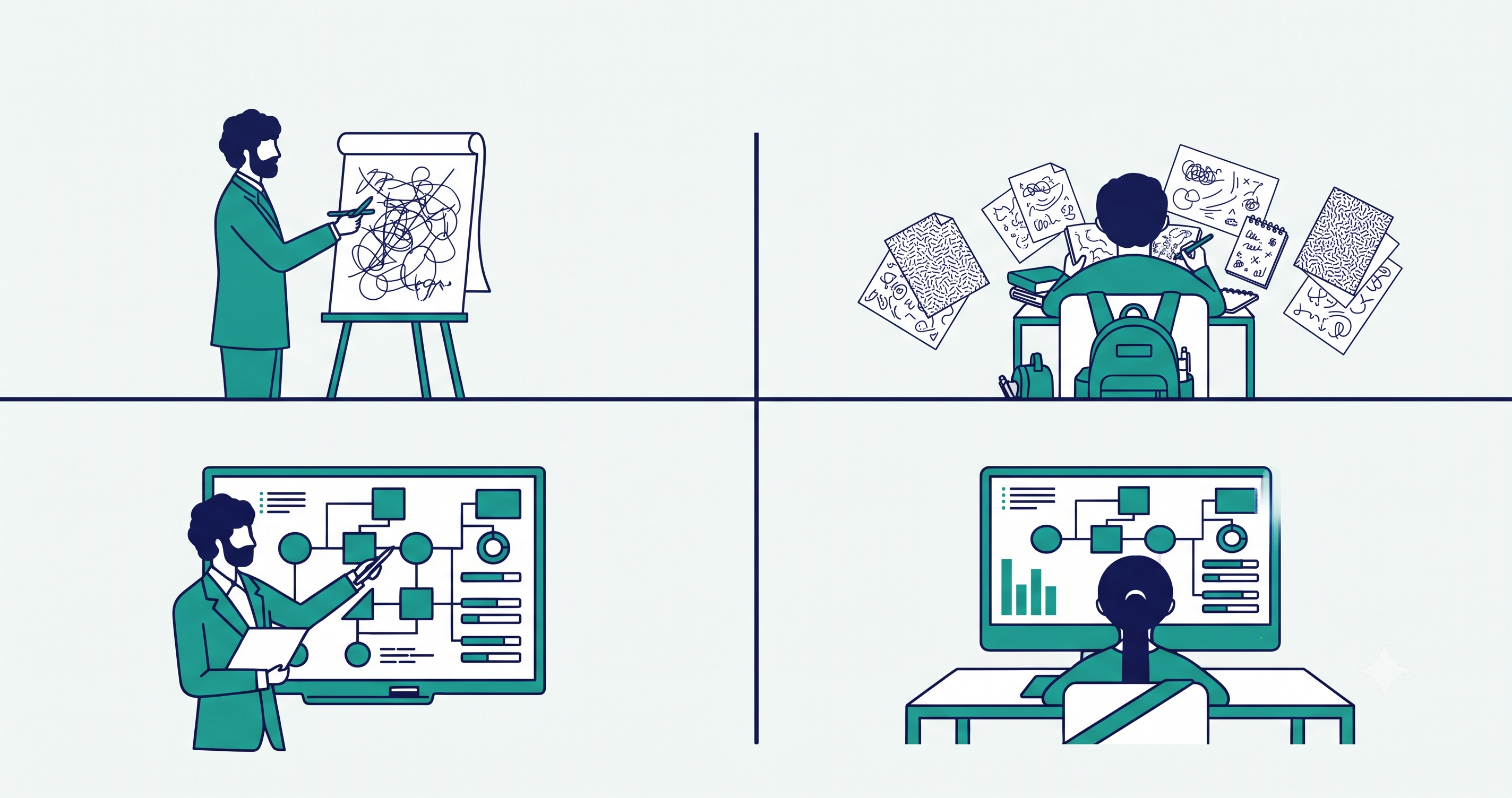
Scaling Technical Literacy in Advanced Business Curricula: Shifting from Theoretical Accounting to Automated Database Engineering
Modern professional industries demand that business and accounting graduates possess rigorous technical mastery over data systems and relational database architecture. By replacing legacy desktop tools and fragmented free software with a centralized visual collaboration platform, academic departments can transition students from passive, hand-drawn sketches to automated database engineering. This strategic guide outlines a scalable methodology to standardize information systems education, enforce academic integrity, and embed advanced automated workflows into core coursework.
Topics:

Standardizing Legacy Workflows in Higher Education: Reclaiming Bandwidth and Institutional Memory in Complex Facilities Operations
Large public universities frequently suffer from severe operational drag caused by localized, tribal knowledge and fragmented technology platforms within sprawling facilities departments. By replacing undocumented, verbal workflows with data-linked visual blueprints, operations executives can secure a unified single source of truth for business continuity. This strategic guide outlines a repeatable methodology to capture intricate system logic, de-escalate administrative friction, and safeguard permanent institutional memory against employee turnover.
Topics:
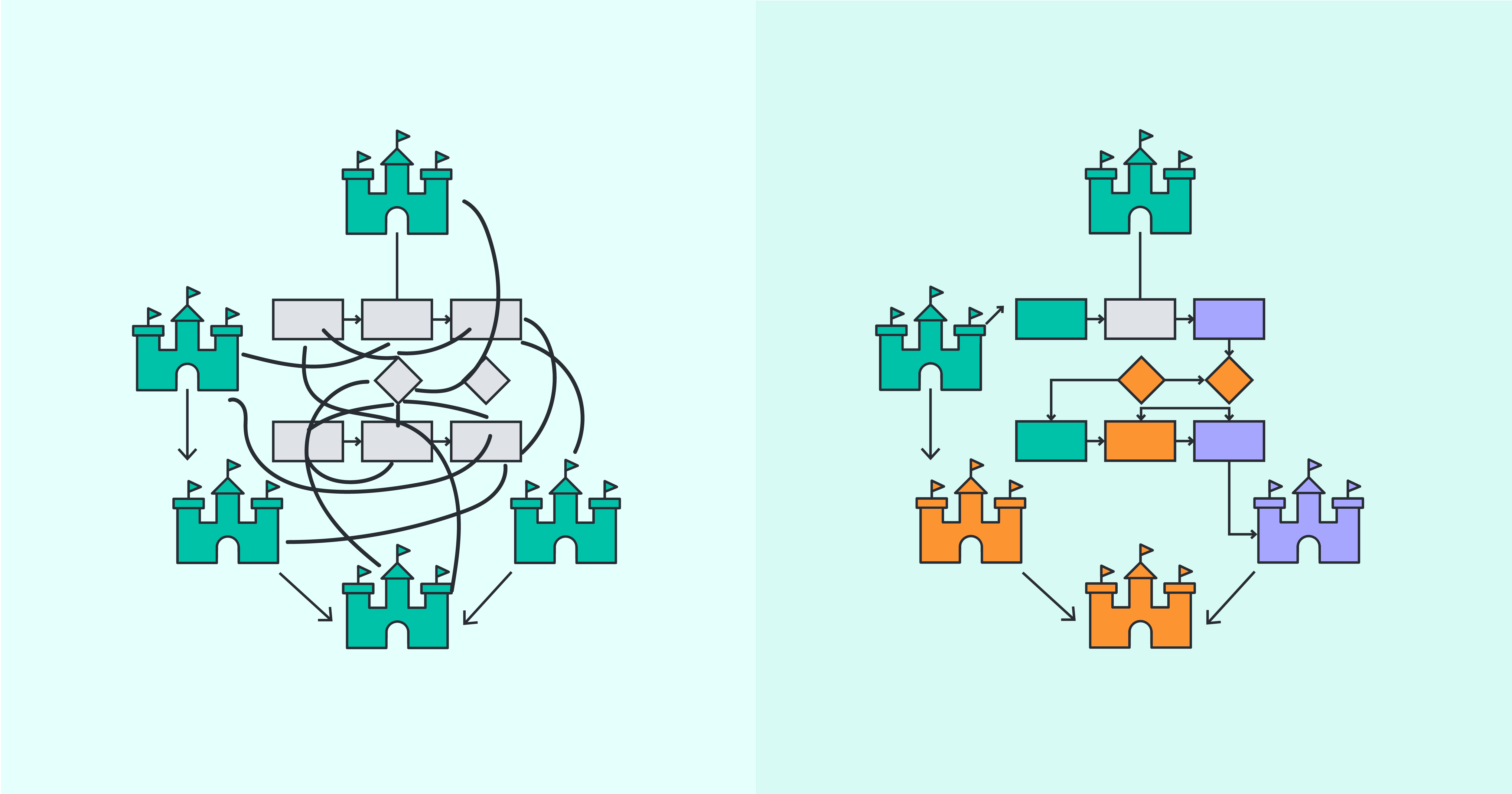
Scaling Standard Work in Large Research Institutions: Transitioning from Fragmented Operations to Governed Visual Benchmarks
Large public research institutions frequently suffer from operational fragmentation due to decentralized documentation and siloed departmental workflows. By replacing chaotic email strings and disparate tracking formats with centralized, data-vetted visual blueprints, academic business strategists can establish an authoritative, frozen source of truth for leadership teams. This strategic guide outlines a repeatable methodology to accelerate institutional alignment, preserve institutional memory, and prepare complex academic ecosystems for secure AI integration.
Topics:

De-Escalating Organizational Friction: Visual Sensemaking and Crisis Response Mapping in Student Affairs Administration
Large public universities frequently experience high-stakes operational friction caused by sudden top-down mandates, leadership transitions, and complex institutional crises. By replacing dense, multi-page text recommendations and cyclical verbal debates with chronological, logic-driven visual frameworks, administrative leaders can achieve immediate shared alignment. This strategic guide outlines how to build scalable process models that lower staff anxiety, protect division boundaries, and secure executive stakeholder sign-off.
Topics:

Operational Excellence in Institutional Advancement: Transitioning from Static Tracking to Automated Systems
University advancement divisions frequently lose valuable administrative hours to the manual upkeep of organizational frameworks and physical facility layouts. By replacing labor-intensive, disconnected documentation with live, data-linked visual assets, operations leaders can reclaim significant bandwidth and institutionalize transparency. This strategic guide outlines how large-scale fundraising operations can leverage automation and embedded web assets to secure a single source of truth and accelerate administrative workflows.
Topics:

Modernizing academic governance: How to mitigate the “Wild West” of workflows
Complex higher education institutions and academic medical centers frequently face operational friction caused by siloed workflows, fragmented legacy platforms, and ungoverned network shares. To mitigate security risks and achieve institutional alignment, operational leaders must transition from passive, static documentation to an interactive, enterprise-wide process repository. By establishing an authoritative "Operational Twin," institutions can secure centralized compliance governance, enforce rigorous stakeholder accountability, and build an enduring foundation of institutional memory.
Topics:

Bridging organizational change and student communication mapping
A senior organizational change manager at a prominent public research university is utilizing visual orchestration to transition the institution from fragmented, static communication plans to holistic, visual maps. By leveraging rigorous process methodologies and non-linear thinking workspaces, the department is consolidating outbound student messaging to eliminate institutional silos and standardize cross-campus governance.
Topics:

Scaling statewide network infrastructure with platform-independent mapping
A director of network engineering at a large public research institution is utilizing visual orchestration to manage critical infrastructure for higher education and regional healthcare networks. By transitioning from legacy, siloed documentation to a platform-independent visual workspace, the department has standardized engineering handoffs and established high-fidelity blueprints for statewide hardware installations.
Topics:

Architecting data governance through visual database modeling
A lead data engineer at a major public research university is utilizing visual orchestration to design a mission-critical single solution data model. Leveraging entity relationship diagrams (ERDs) as the foundational blueprint for engineering build allows the institution to establish a live communication tool that secures leadership approval and technical clarity before the commencement of code development.
Topics:

Enhancing remote collaboration in product management leadership
A head of product management at a national department for education is transitioning from text-heavy documentation to dynamic, visual-first workflows. Through replacing static presentations with collaborative canvases, the institution has increased inclusive participation for remote teams and empowered stakeholders to co-create during the project initiation phase.
Topics:
Bring your bright ideas to life.


By registering, you agree to our Terms of Service and you acknowledge that you have read and understand our Privacy Policy.