Preparing Complex Enterprise Systems for an AI-First Future
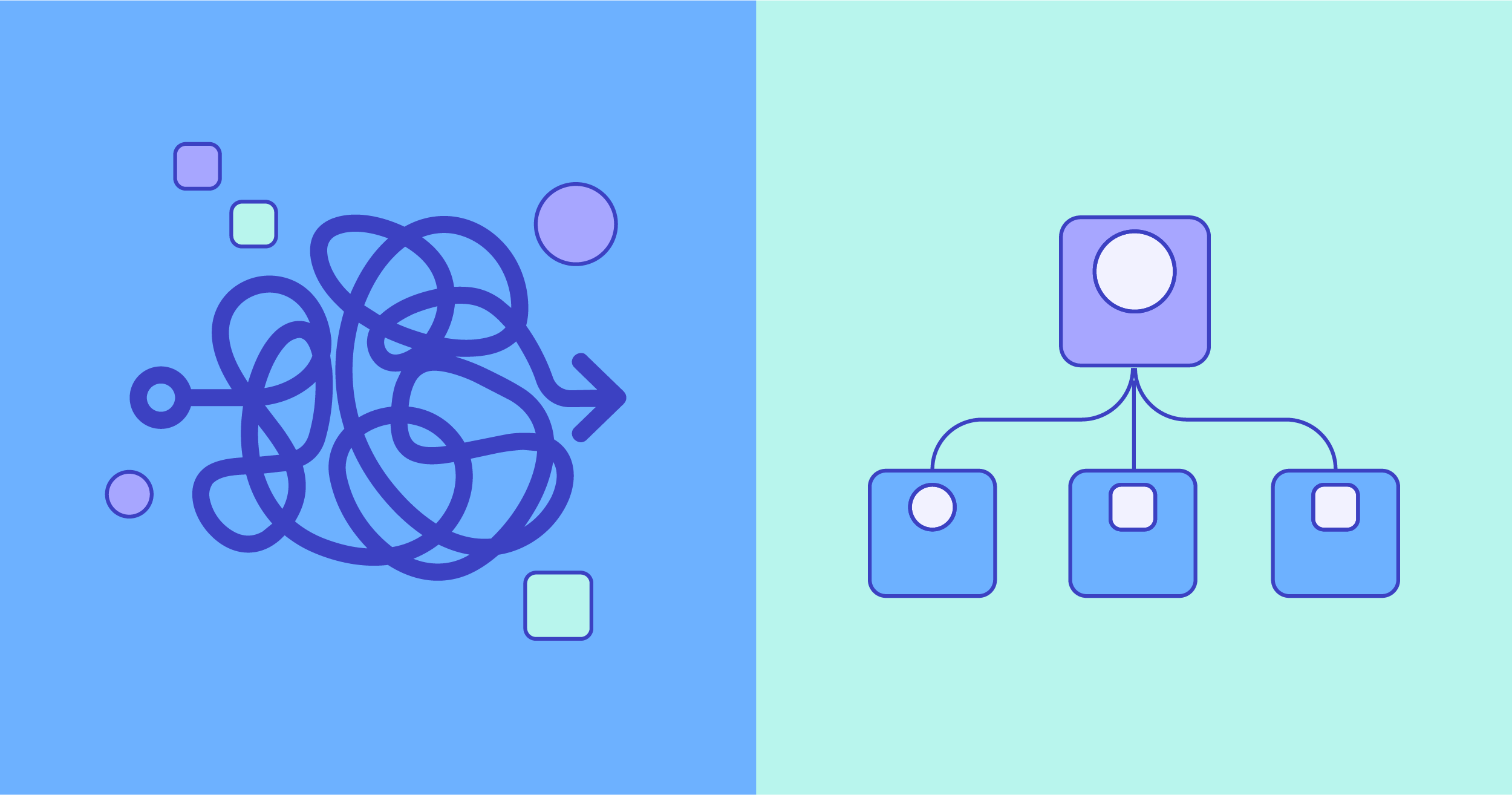
HR data rarely lives in one place. In large multi-campus university systems, it flows through a decentralized web of dozens of internal tools, legacy databases, and hundreds of point applications, much like a gigantic, fragmented, highly complex tributary of rivers.
When project leads attempt to make sense of this convoluted system using manual interviews or static whiteboards, they inevitably hit sticky note insanity.
This documentation debt creates three major operational risks:
-
Implementation delays: Launching new enterprise platforms (like Salesforce or Workday) fails when backend data flows are poorly documented.
-
Brain-drain vulnerabilities: Critical process logic lives in the heads of individual staff members rather than centralized systems.
-
Unmanageable document density: Giant, single-file architectural diagrams become too massive and unwieldy for anyone to navigate or maintain.
To shore up their data foundation, modern higher ed HR leaders are using the Lucid Work Acceleration Platform to build an intelligent, interlinked system map.
HR System Orchestration
1. Collaborative discovery over solo note-taking
Accurate system maps shouldn't rely on a single analyst trying to transcribe interviews. By hosting interactive workshops in virtual whiteboards (Lucidspark), project leads bring cross-functional teams directly into the canvas. Staff map their own day-to-day data flows, capturing real-world operational truth instead of theoretical models.
2. Centralized integration blueprint
HR teams build a multi-layered navigation hub to manage dozens of interconnected systems without creating visual clutter:
-
Master landing page: A central table of contents uses visual buttons and hotspots to link out to 40+ dedicated sub-system maps.
-
Dynamic timestamp automation: Automated "last modified" fields track documentation currency and enforce team accountability.
-
Governance and sensitivity tags: Clear visual status markers (Draft, Approved, Restricted) govern data sensitivity and access rights across campuses.
3. AI-driven architectural agility
In an effort to eliminate manual shape-drawing bottlenecks, teams leverage code-to-chart automation (such as Mermaid script integration) and AI-generated process outlines. This shifts the team's focus away from manual diagramming and onto high-level data strategy, such as mapping how HR records intersect with enterprise CRM schemas.
Where it’s heading
"We are shoring up our institutional knowledge to prepare for an AI-first future... bringing in guest users to get their brains into the document rather than acting as a solo note-taker."
— HR Project Lead, Multi-Campus University System
Innovation with AI is the ultimate destination. But before an institution can innovate with AI or modernize its core tech stack, it must understand its existing data architecture. Replacing fragmented notes with an interlinked, automated visual repository gives HR leaders the power to eliminate process risk, preserve vital institutional memory, and build an AI-ready foundation.

