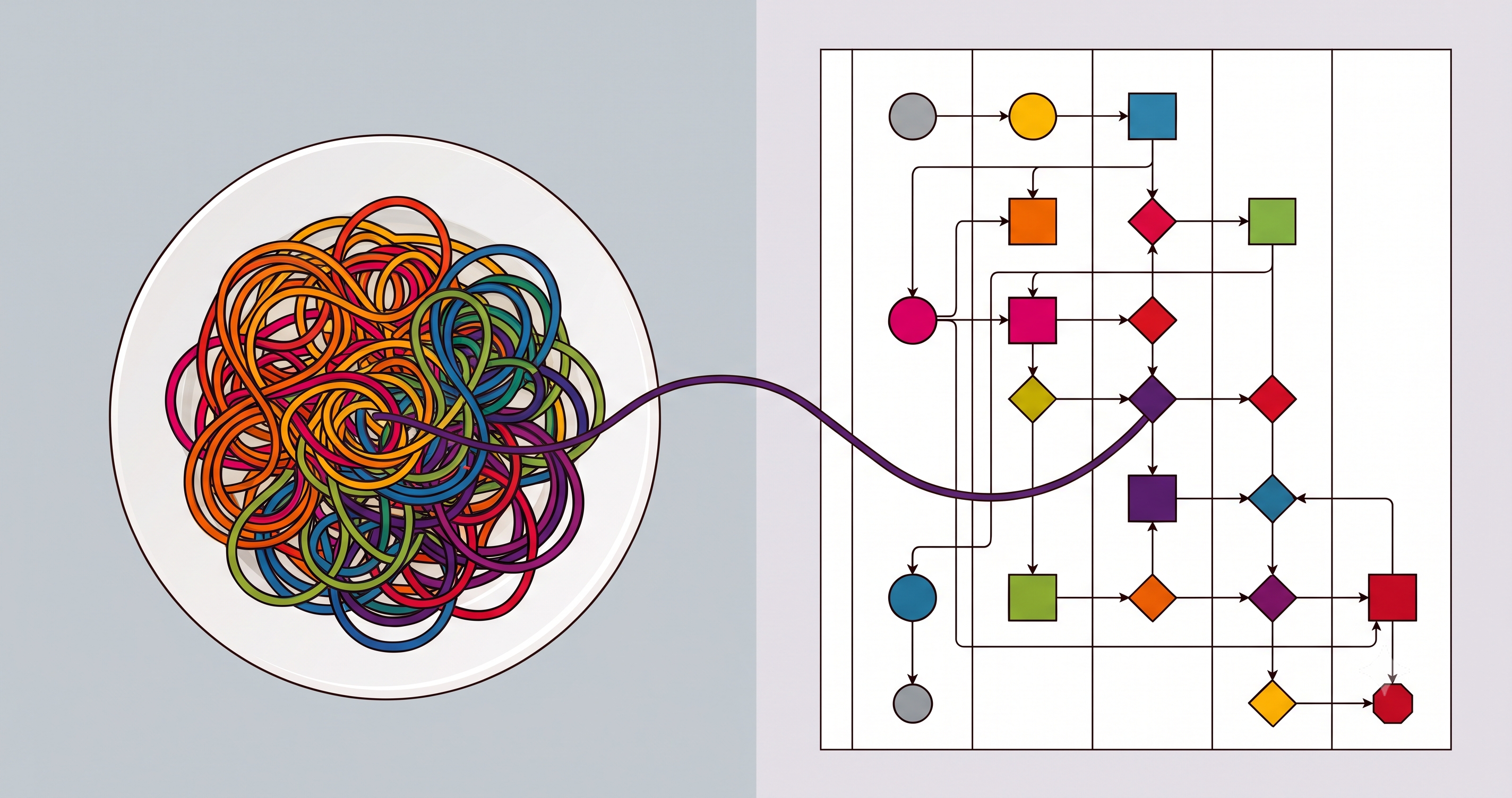
Crisis, strategy, and burnout: How to move from chaos to clarity on your team
When a sensitive situation or campus security emergency hits, relying on verbal agreements or static text files creates dangerous operational vulnerabilities:
-
Staff anxiety: When a new, high-stakes mandate comes down without clear boundaries, teams spiral, fearing they are about to be hit with an unmanageable, arbitrary workload.
-
Dead PDF trap: Well-meaning leaders often email critical visual protocols as static PDFs, assuming others don't have platform access. This manual method kills live collaboration and locks outdated information in people's inboxes.
-
Strategic repackaging overload: Divisions are constantly forced to juggle competing campus strategic plans and accreditation demands. Without visual synthesis, these look like entirely separate, conflicting burdens rather than overlapping, identical goals.
Solution: Campus readiness with Lucid
To de-escalate friction, executives must build a centralized visual repository that transforms chaotic verbal mandates into scannable, standardized blueprints.
1. Chronological crisis protocols
Emergency response requires split-second clarity. By using a standardized swimlane structure, administrators can map complex crisis workflows across three distinct temporal phases:
-
Trigger event: The exact compliance or safety parameters that activate the protocol.
-
Immediate response: The high-stakes, real-time tactical steps needed to secure the campus.
-
Aftercare: The long-term recovery and mental health support mechanisms required for the community.
2. Radical transparency and ownership
To stop staff anxiety during a restructure, visual frameworks must explicitly define boundaries. By laying out task-force mandates in a visual grid, leadership can use high-contrast color coding to highlight exactly what falls under a given purview—and, more importantly, what does not. Staff can instantly breathe a sigh of relief seeing what they are not responsible for.
3. Safe space for reorgs and planning
Teams need a safe space to model changes before they go live. By locking a baseline structural layer (like a facility floor plan) and allowing managers to overlay multi-colored digital sticky notes, leadership creates a low-risk sandbox. Teams can dynamically test personnel placement and space optimizations without messing up master records.
Executive action checklist
Use this three-pronged action plan to transition from static confusion to enterprise-governed collaboration.
🔳 Priority 1: De-escalate the crisis chaos
-
Action: Sequence emergency protocols into chronological swimlanes (Trigger ➔ Response ➔ Aftercare).
-
Outcome: Eliminates repetitive verbal debates and ensures a split-second, shared understanding during an emergency.
🔳 Priority 2: Protect staff bandwidth and lobby upward
-
Action: Build executive-ready visual grids using high-contrast division boundary markers to show ownership.
-
Outcome: Lowers staff anxiety by clarifying workloads, while giving VP-level leadership the crisp visual tools needed to defend resources to central administration.
🔳 Priority 3: Eliminate document silos
-
Action: Ban manual PDF email attachments for living processes; transition exclusively to secure enterprise sharing links. Visually synthesize competing strategic and accreditation plans onto a single canvas.
-
Outcome: Unlocks multi-departmental interaction, proves compliance alignment, and stops teams from doing redundant work.

