Log in

Distance Learning

Transfer your current curriculum to Lucid for Education's virtual collaborative canvas. Use free templates designed by teachers to facilitate an engaging digital learning experience.
View Distance Learning Toolkit
Distance Learning

How to use Lucid

to take your current lesson plans and turn them into distance learning activities:
best practices

We're here to support you in designing around student interaction. Students will be able to actively participate in their learning while developing digital literacy skills.

Distance learning in your classroom

Expert educator, Anneliese Pixton provides three quick ways that you can take your current lesson plans and turn them into distance learning activities.

Read more

What online learning looks like

Class is in session, distance toolkit put to the test.

The Lucid for Education Distance Learning Kit

Get ready for distance learning tips.

Share your digital classroom successes

FAQs about distance learning

Expand all
What do I need to know on my first day using Lucid's platforms?

  1. If you’re using a free Lucid account make sure it’s an education account. If your district has Lucid for Education premium account be sure to use your integrated account to access the assignment creator and other features!
  2. Leverage template ideas from other teachers in the gallery. Don't be afraid to make mistakes! We promise there's almost nothing you can't undo. Share what you learn to help others on their journey.
  3. Decide how you’ll distribute assignments and lessons with your students: 
    • Through an email or newsletter
    • Directly from the Lucid platforms
    • If you’re using a paid account, be sure your integrations are set up with your LMS
    • Link sharing in the classroom chat
  4. Locate feature find, it will be your best friend going forward. You can ask it how to accomplish anything in Lucid.
  5. Be brave, “borrow” liberally from existing templates leveraging work other teachers have made.

How do I teach remotely with video calling?

Use Lucidchart and Lucidpress templates as an anchor for your existing lesson plans. Consider what you want to teach, focus on one key idea and then use the template to easily express that idea during your call. Teaching online requires a place to focus, and Lucid templates are designed to provide that while being quick and easy to create.

How do I teach remotely without video calling?

Choose one key idea or skill you want to teach. Embed a video introducing the content in the document, keeping the duration less than three minutes. You can learn how to do concisely express ideas in a video in the link below. Provide links to study resources in the document using sticky notes or other attention-drawing callouts. Then use an LMS integration to quickly distribute to students or send them a direct link to the document. Hear how →

How do I make a lesson more accessible?

Consider how a document may behave with limited online access and leverage Lucid’s accessibility features.

What if my students do not have regular internet access?

  1. For young students without the internet, communicate through images and limit text-heavy sections. You can leverage public television segments and printable Lucid documents to help students digest their new knowledge. Do not forget to press for parental support to encourage these younger students. You'll also want to prioritize document content by what is going to reach the broadest cross-section of students. Be sure to distribute information to students on how to download the document and use it offline. 
  2. For older students, reference textbooks they may have at home or paste snippets into the Lucid document so they can download and reference information where they have access.
Hear how →

How do I keep students engaged in an online medium?

Use a Lucidchart or Lucidpress document as an anchor for interaction. Place students into groups to work together and communicate frequently on the material. Frame topics in ways that are relevant to their age group and provide interesting images to pique curiosity. Remember to spend less time talking and more time showing. Let students vote on what learning method they want to use so they can take ownership of their own learning. For example, to cover a new concept in math ask students "Would you rather work on problems in your own Lucidchart tab or work on one problem as a group?" Hear how →

How do I keep in touch with other teachers?

Leverage Lucid's collaboration and sharing features to benefit from each other's experiences. Share subject folders with templates and instructions so that teachers can adapt them to their classrooms. Don’t worry about polished perfection, great ideas are more commonly formed as a team! Use idea sparks and toolkits to quickly disseminate how-tos and workflows. Use social media to share your lesson plans you create with the broader educator collective!

How can I build effective, interactive lessons?

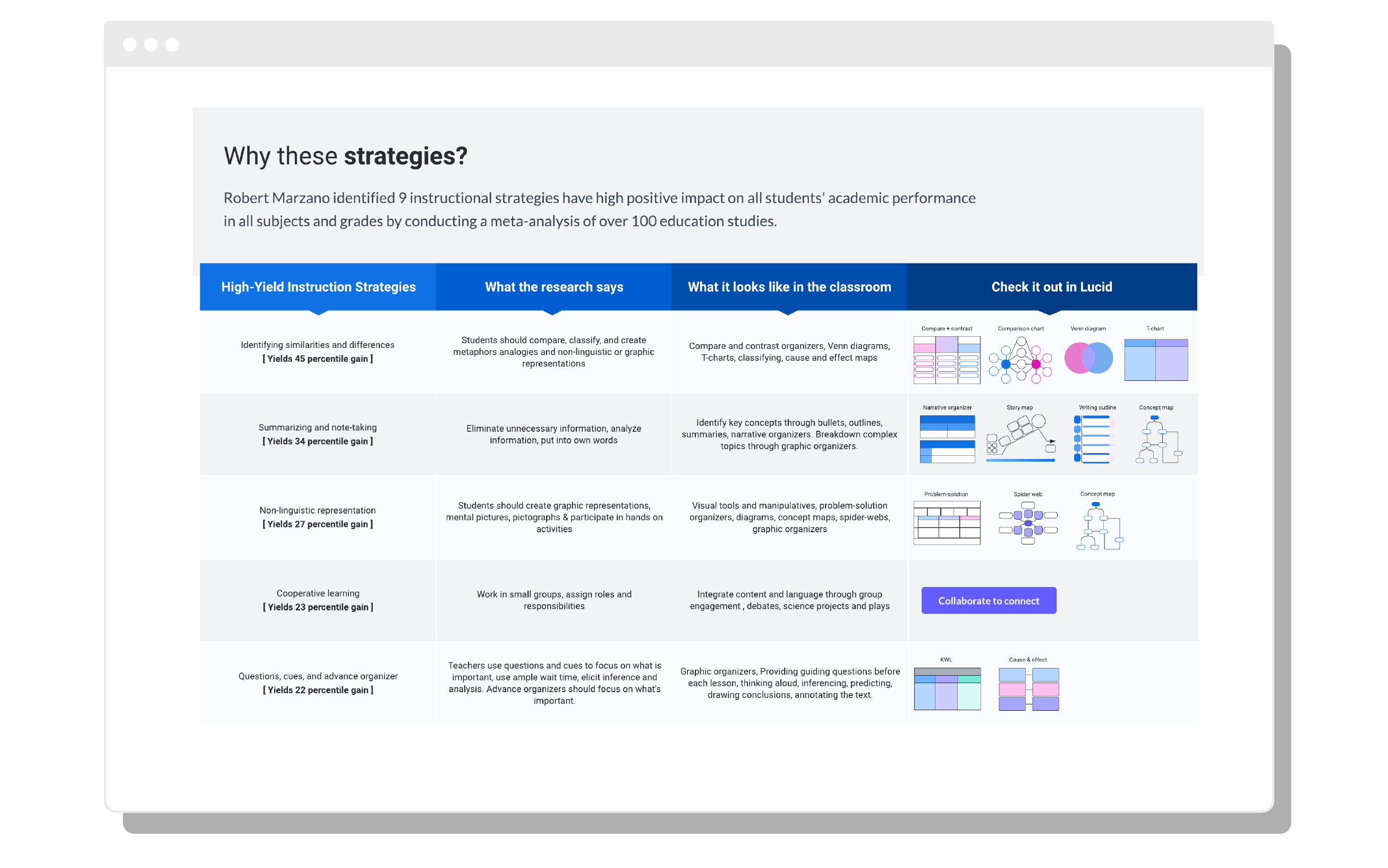
  1. Bring all conversation back to one key point. Reference Marzano's work or standards-based grading to determine what is essential. 
  2. Take risks and plan to fail, learn and try again. You can't expect from your students what you're unwilling to risk yourself
  3. Show more and talk less. Let students create their own narrative within the lesson structure you've laid out.
  4.  Choose an anchor activity to bring attention back to your chosen key point.

Is project based learning still possible?

Absolutely! You could create posters, presentations and flowcharts for a bot chat. Now is the time to let your students' creativity shine and pursue things that interest them in the way only digital natives can! For example, create a bot chat for questions about how to solve problems using the FOIL Method. Hear how →

Strengthen your virtual classroom.

Solutions

  • Lucid for Education
  • Lucidchart
  • Lucidspark
  • Lucid in Higher Education
PrivacyLegalCookie privacy choicesCookie policyYour privacy choices iconYour privacy choices

© 2026 Lucid Software Inc.